
Shaping Air
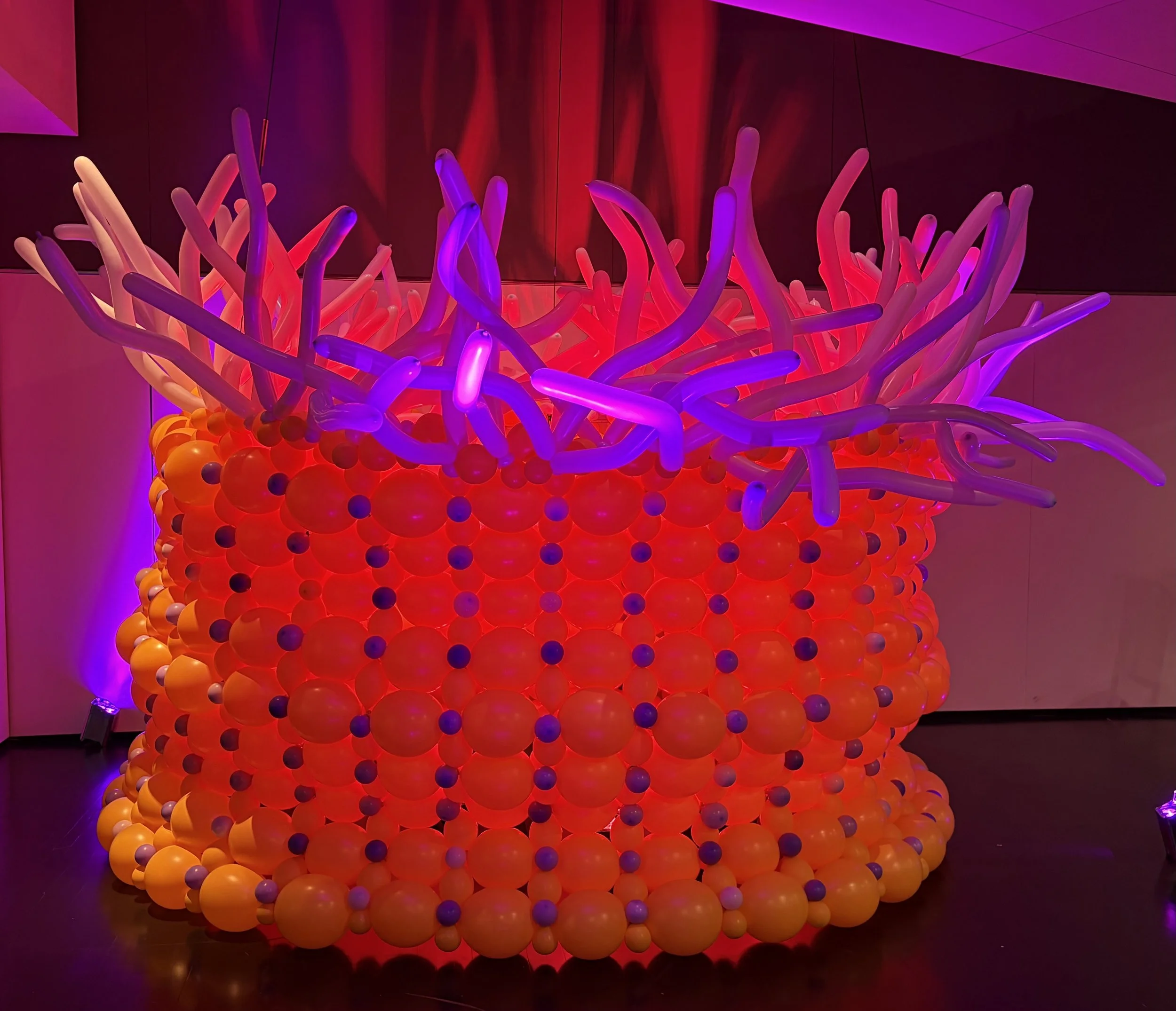
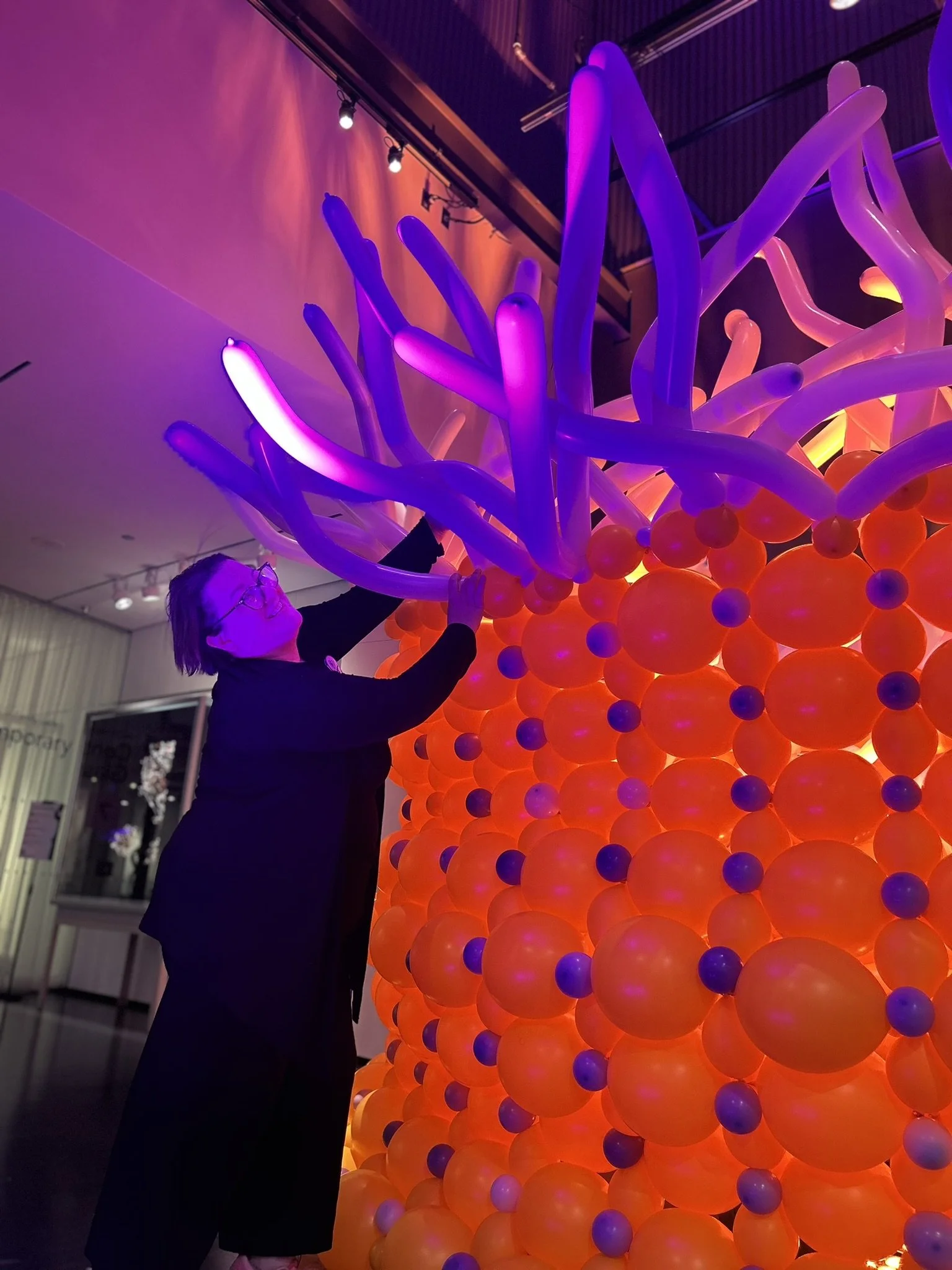
Blaschka in Balloons - Balloon anemone inspired by glass sculpture from Blaschka studio. Sculpture was constructed at the Corning Museum of Glass in Corning, NY.
We just completed a project at the Corning Museum of Glass. Over the course of the weekend, roughly 250 people participated in the construction of a sea anemone inspired by the work of Leopold and Rudolf Blaschka. I’ll come back to that installation in a bit. First, I need to provide some backstory.
I love the Corning Museum. Part of that comes from the similarities I see between working with balloons and working with glass. The galleries are fascinating to wander through. But just as important are the people that work there. They treat everyone who walks through the door well, whether there to work or to explore the galleries.
A program the museum runs each summer is a series of performances for young audiences called Little Gather. In glassblowing, a “gather” is the molten glob of glass collected on the end of a blowpipe before it’s shaped. So, the name is rather fitting for a program that shapes little minds through educational performances.
In 2009, I was invited, months in advance, to do my first Little Gather show, to take place on July 1. There were no conflicts on my calendar, and nothing else even close to that date. I needed work, so I took it, despite the hour and a half drive to Corning. As July approached, I got a call from my friend Todd asking if Kelly and I were available to join him for the July 4th gig on the White House lawn. Every year, there’s a huge Independece Day celebration outside of the White House. The adminsitration in office celebrates the way they want. For years, there were thousands of guests invited to celebrate with music, food, and balloon twisting. (There were other activities too, but I tended to focus on the balloons and don’t recall what else was happening.) This wasn’t my first time performing at the White House. It’s a prestigious gig, and one I’m always happy to have on my résumé.
At the time, the Corning Museum of Glass, which I had only visited as a museumgoer, didn’t feel as prestigious by comparison. Corning is a small city in upstate New York, with a population under 11,000, a couple of hours from Rochester and far from any major metropolitan center. I remember the thought looping through my head as I drove south from Rochester: If I’m about to perform on the White House lawn, why do I also have to do this silly little gig in tiny Corning?
That thinking didn’t last very long.
Early that morning, I pulled into the parking lot at the museum. An intern met me outside and insisted on helping unload my car, pushing my gear inside while I went to find a proper parking spoce. Once inside, I was greeted by the A/V technician, who presented me with a selection of microphones to choose from. Up until then, most of the kids’ shows I performed required me to bring all my own audio equipment, so having someone to do A/V was a huge treat.
Then came the question that really surprised me. I was asked whether I wanted my bottle of water chilled or at room temperature. (Room temperature, of course.) Clearly, they were going to make me as comfortable as possible. My thoughts of this being just a minor gig faded quickly. This was going to be fun.
Arriving in Washington, DC for the much more “prestigious” White House gig offered none of that. In fact, when we asked for water, no one could quite figure out how to get it to us, chilled or otherwise. The balloon crew hadn’t been included on the list of people allocated water. We eventually found someone who had more than they needed, but the contrast stuck with me.
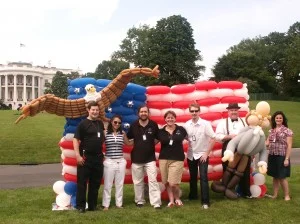
A balloon version of the US flag, with the team that made it, on the White House lawn.
CMoG remains one of the best “small” venues I’ve ever performed at. I’ve had the privilege of returning many times since that first show. This past weekend marked the first time we were invited, not to perform, but to install a giant sculpture.
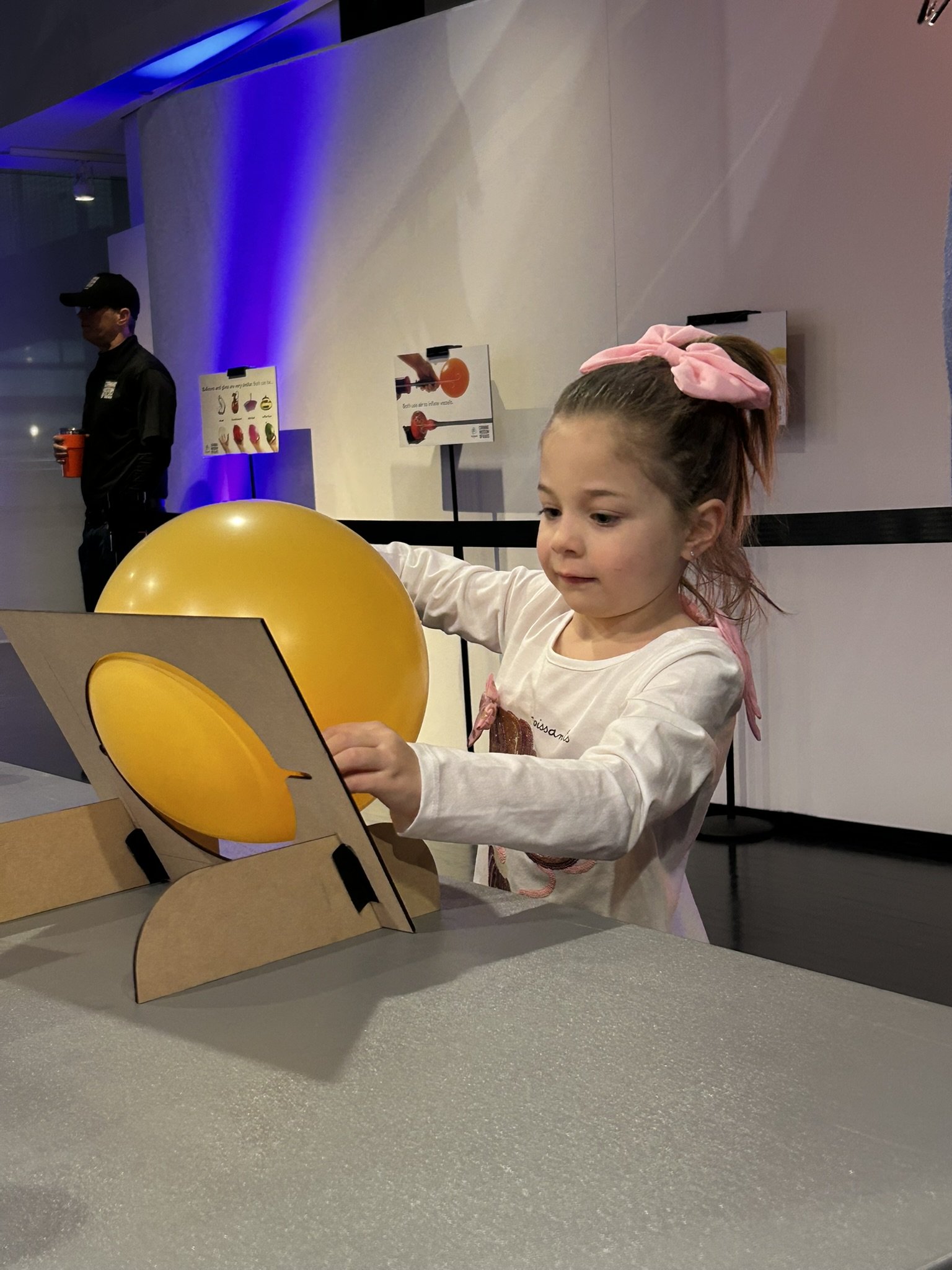
The piece took the form of a Bubble Mural-style build, where the audience becomes the makers. Visitors were guided through a simple set of steps to construct a ten-foot-tall sea anemone inspired by the Blaschkas’ glass models. Walking through the museum, you can find a glass anemone similar to the one we created. The Blaschka version, just a few inches tall, is much closer to the scale of a real anemone. Ours, enlarged to architectural scale, invited participation.
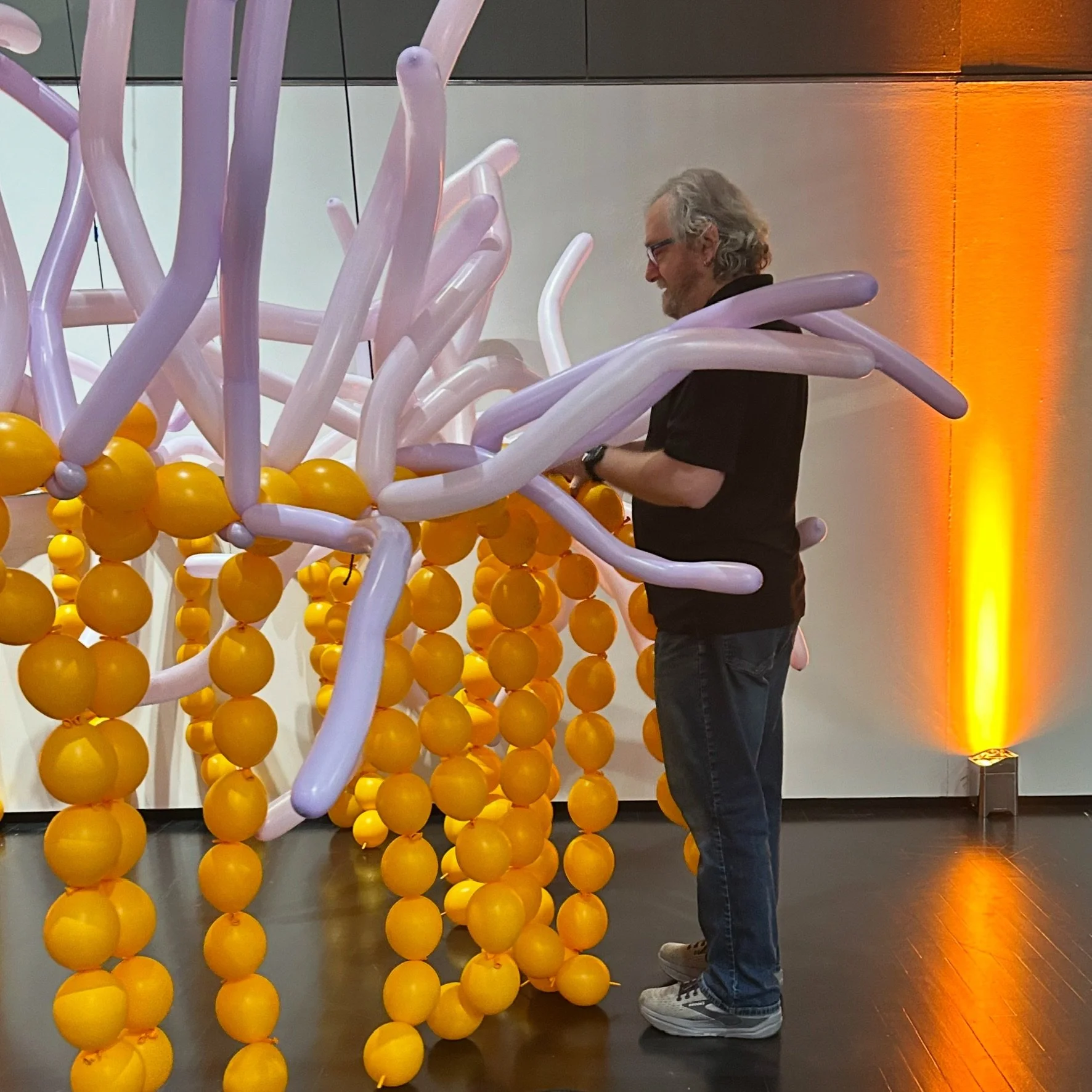
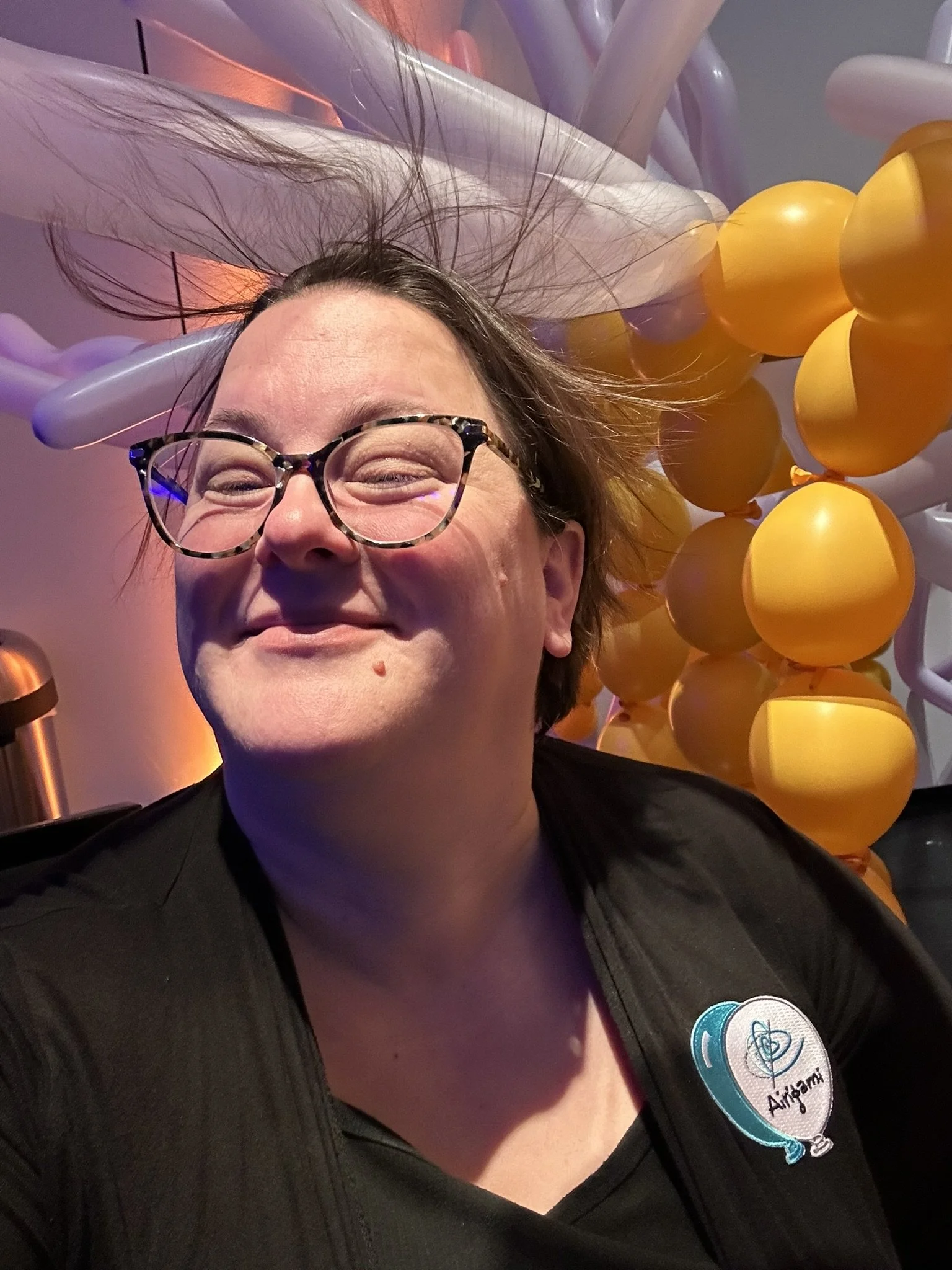
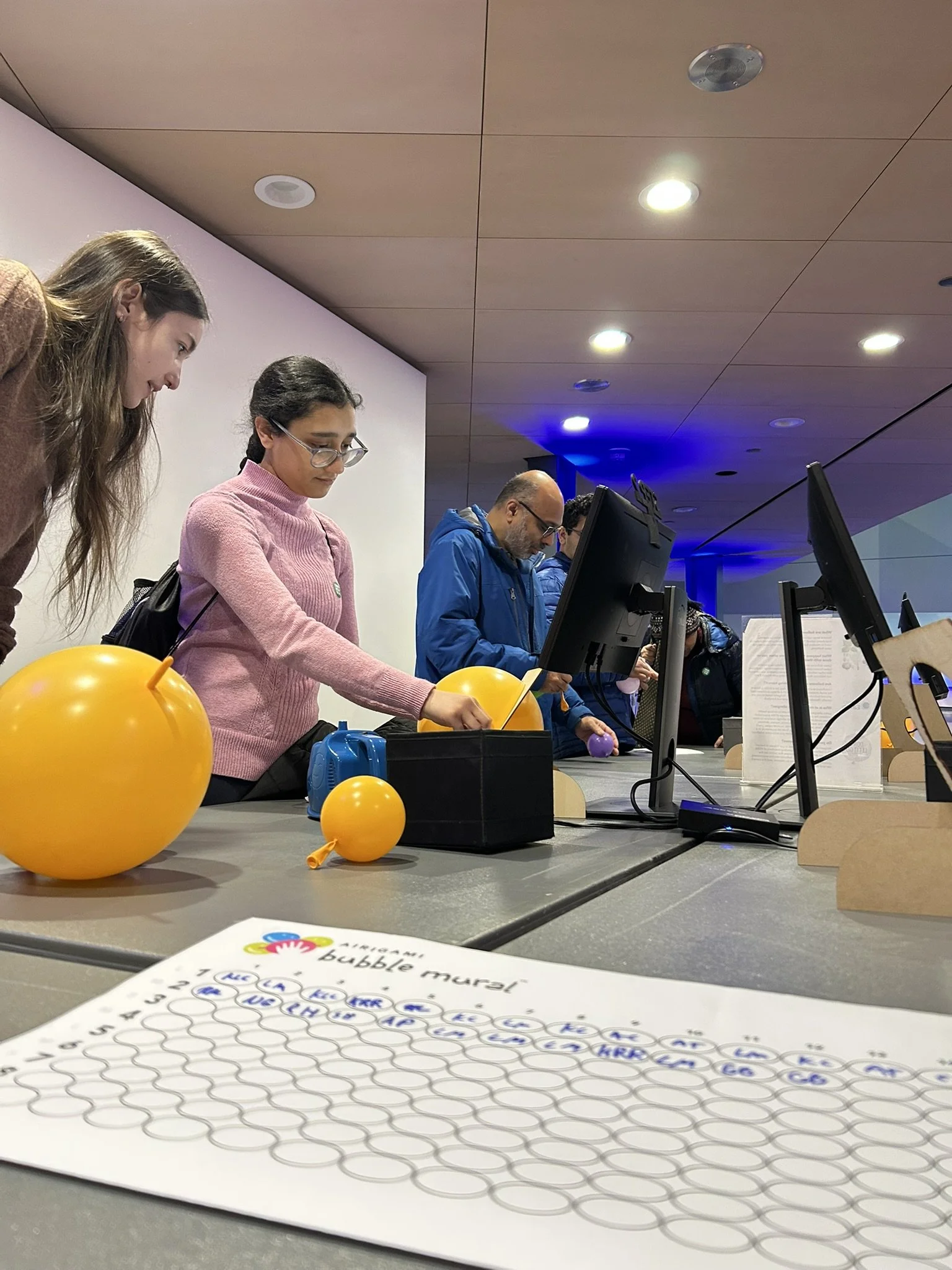
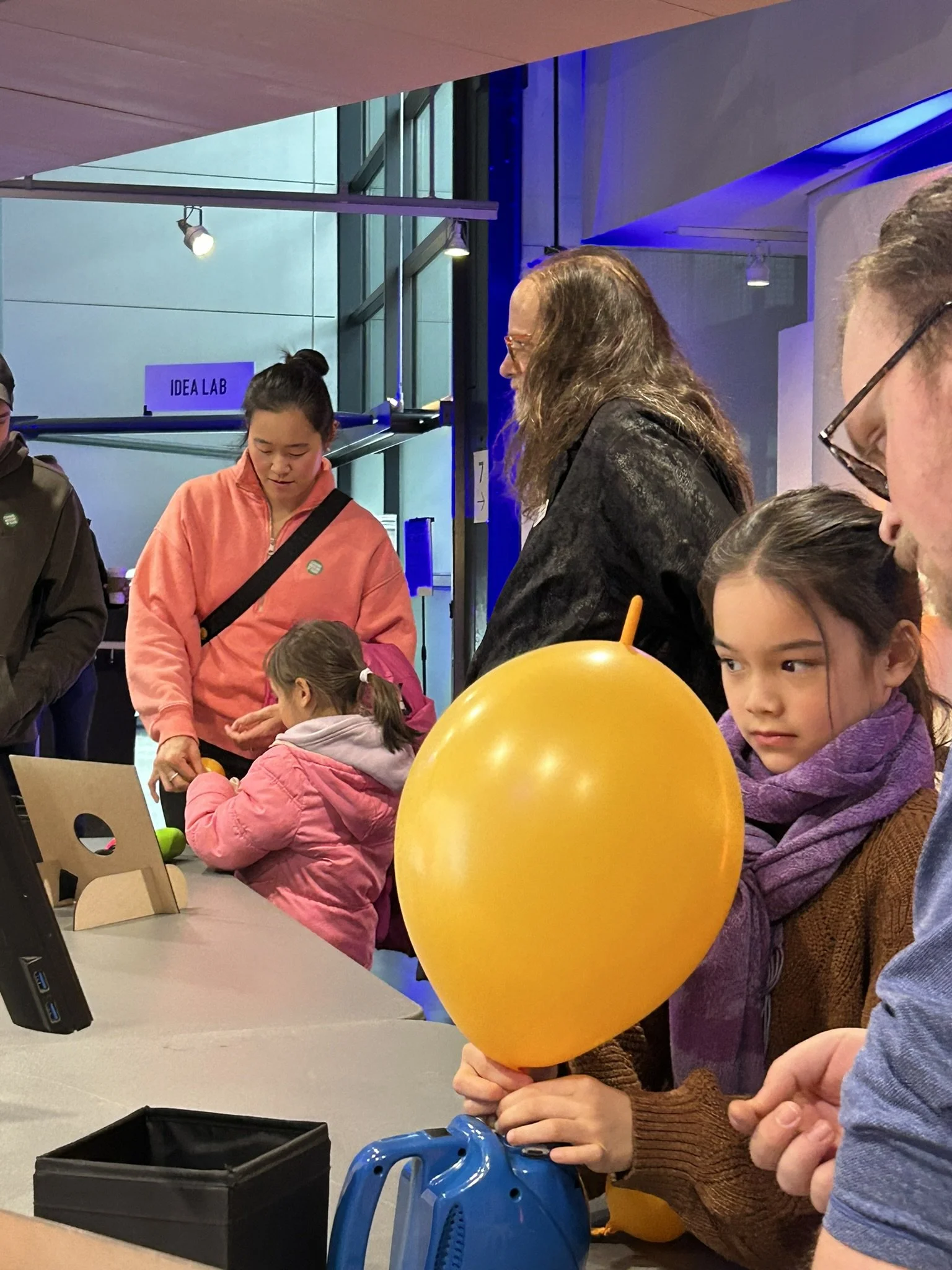
The installation drew so much attention that it was a pleasure to wander through the 35 Centuries of Glass gallery and overhear people searching for “the Blaschka anemone,” a piece they hadn’t even noticed before our project pointed them toward it.
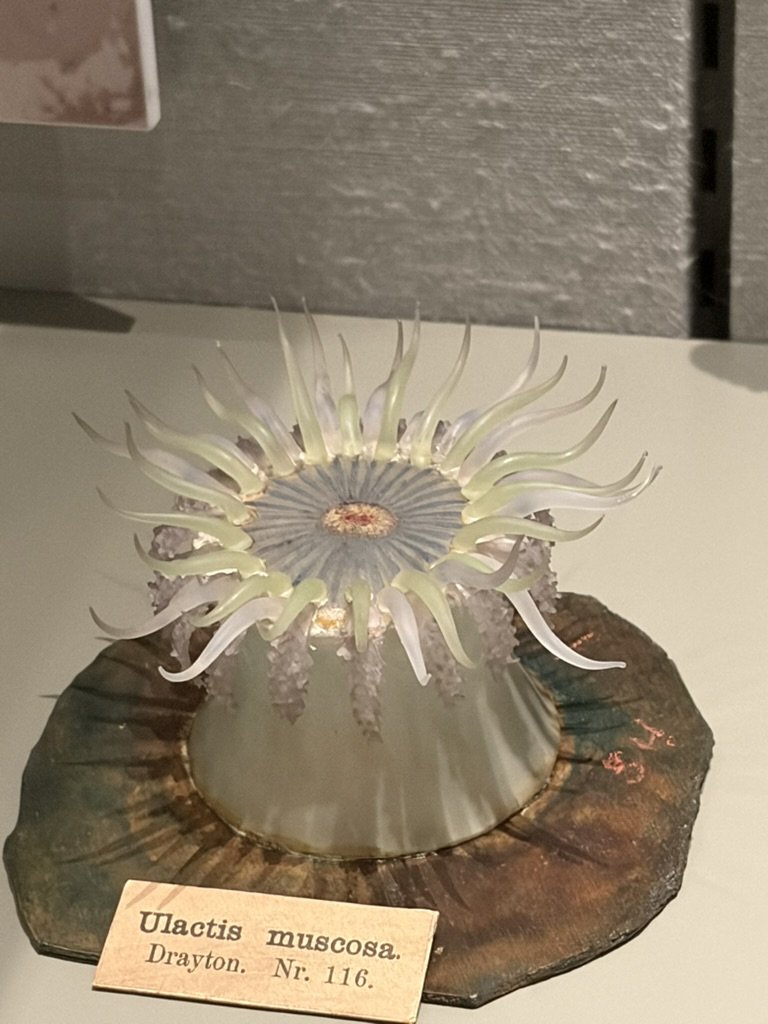
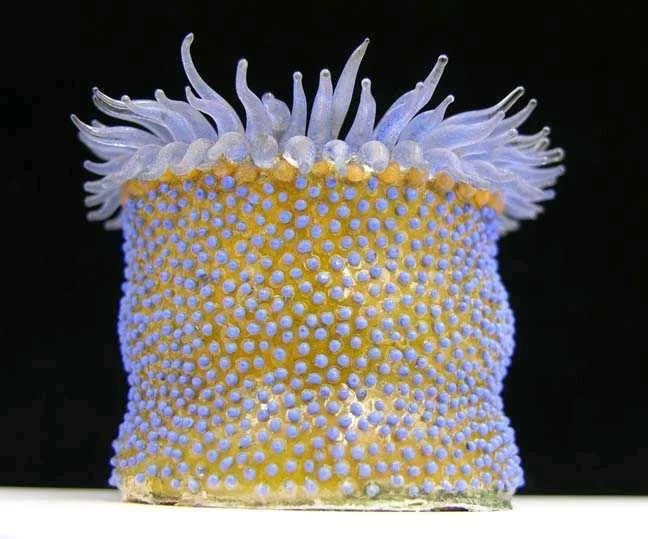
The first image above is the Blaschka anemone currently on display at CMoG. The second image is another Blaschka piece based on a very similar anemone. We chose to base our sculpture on the latter one due to the extra color and detail that we thought participants would enjoy.
Which brings me back to the similarities between balloons and glass.
The rounded shapes of blown glass look a lot like the shapes balloons form. For years, I’ve wanted to make a glass balloon dog. That hasn’t happened yet. I’ve taken a few glassblowing classes, though they were decades ago, and a handful of flameworking classes more recently, though still years back. And I never actually good enough to make anything particularly interesting.
I vividly remember my first glassblowing class, when the instructor told me to give a gentle blow into the pipe.
I thought I did.
“I said gentle!” he called out, as we both watched the gather at the end of the pipe slowly expand — at the slow speed of molten glass, in response to the air I’d blown into it.
“What could you possibly do that you’d call that a gentle blow?” he asked.
I explained that I work with balloons.
It doesn’t take much air to inflate glass. It just takes patience. Compared to the instant response of a balloon, glass moves slowly, deliberately, and on its own timetable.
At this rate, I may never develop the skills needed to make that glass balloon dog myself. But maybe someday I’ll get my hands on one made by someone else.
Near our installation, we had signs that pointed out some of these parallels between glass and balloons.
The following images were made by Airigami and Corning Museum of Glass.
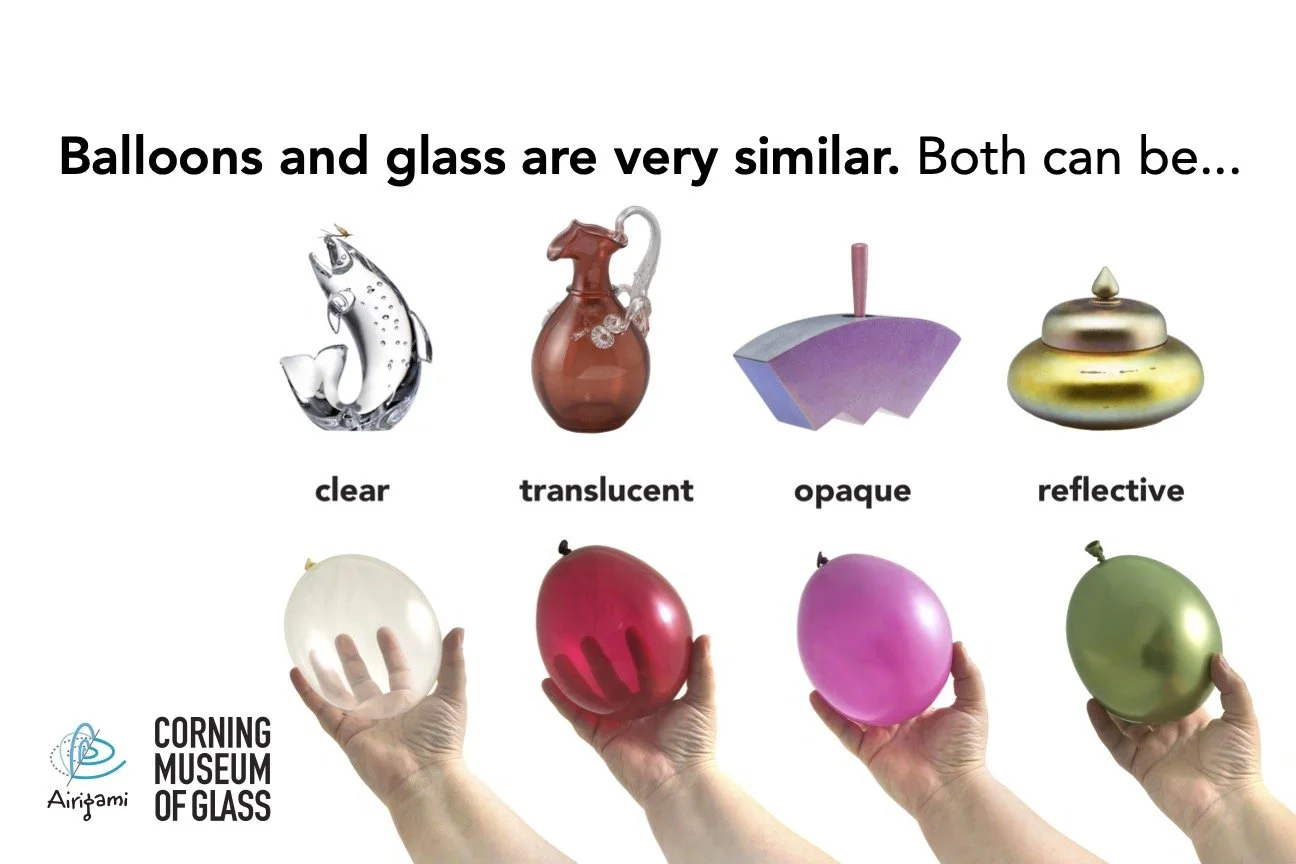
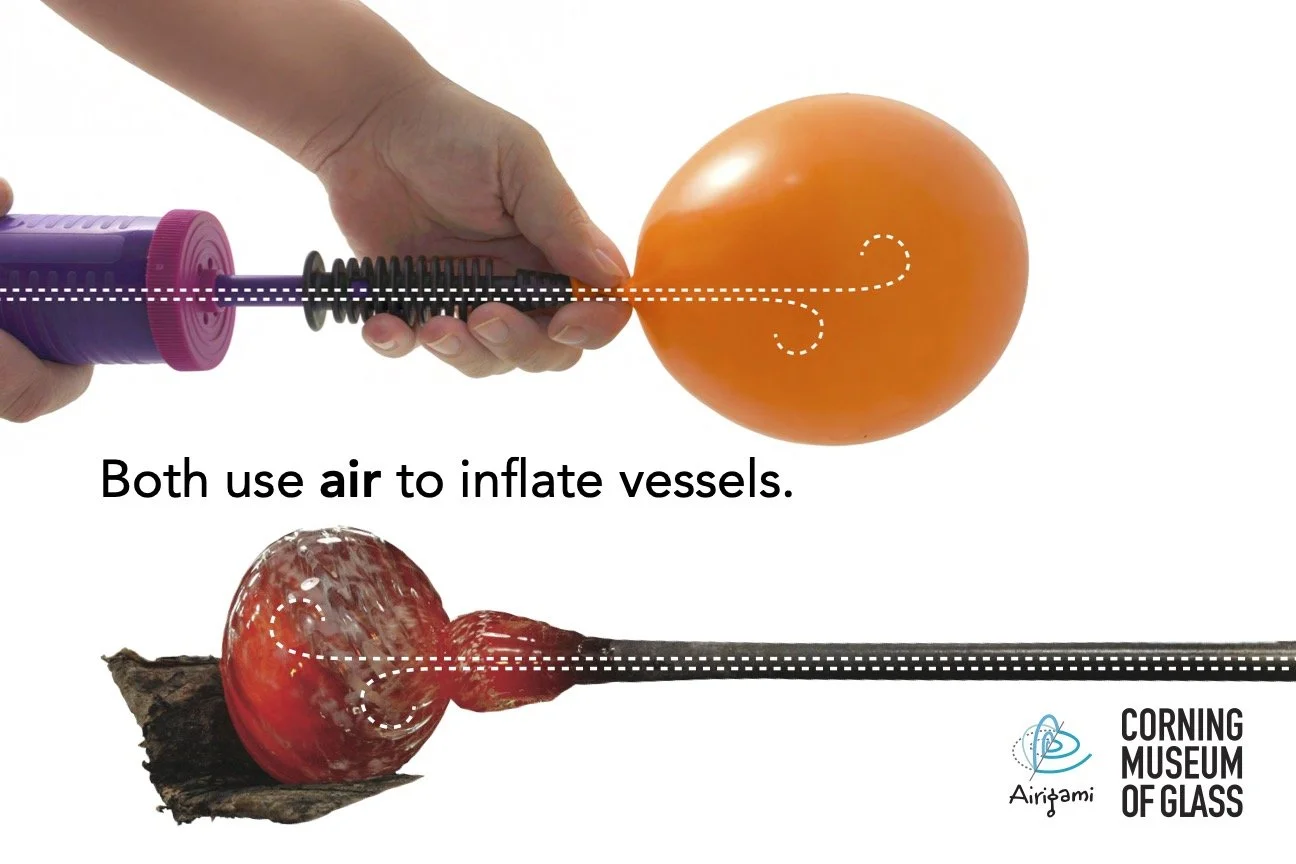
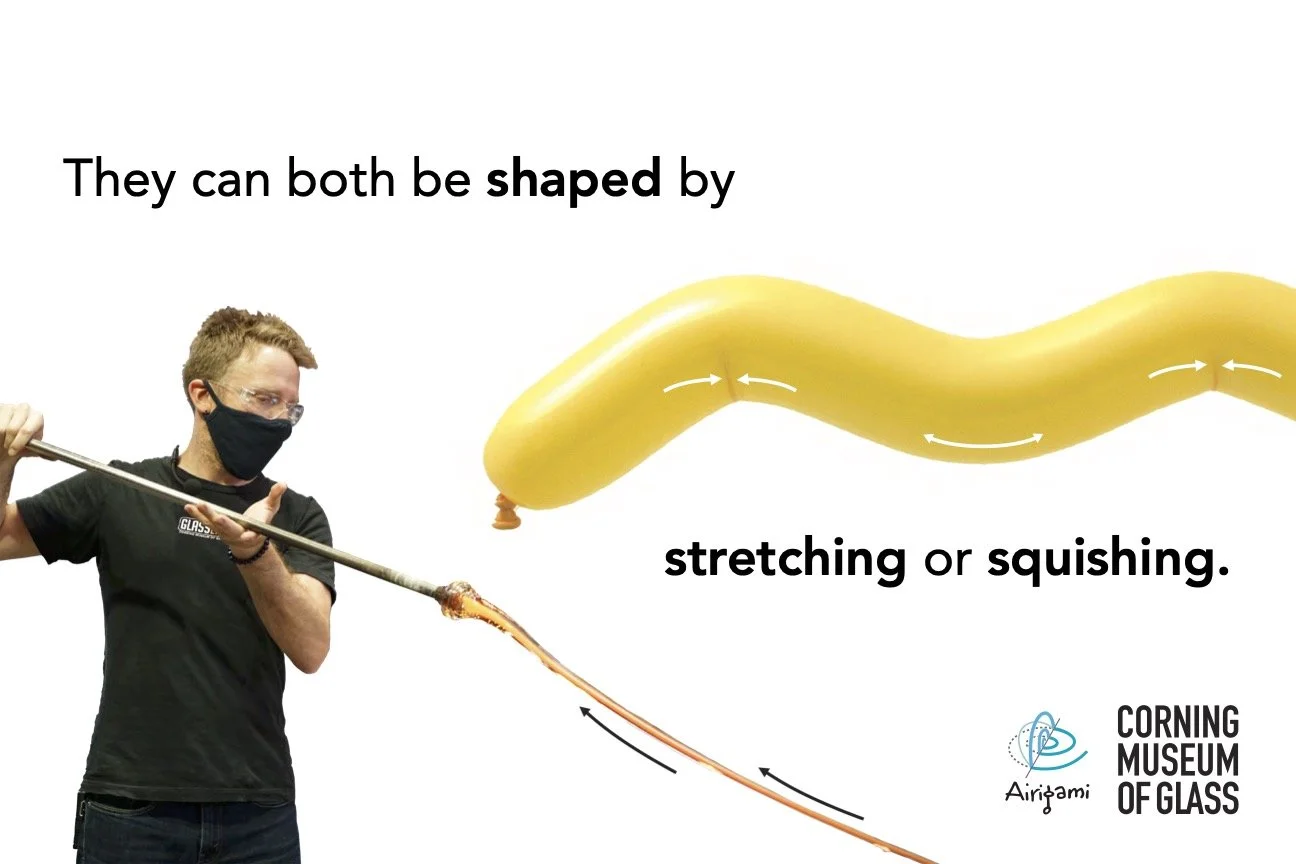
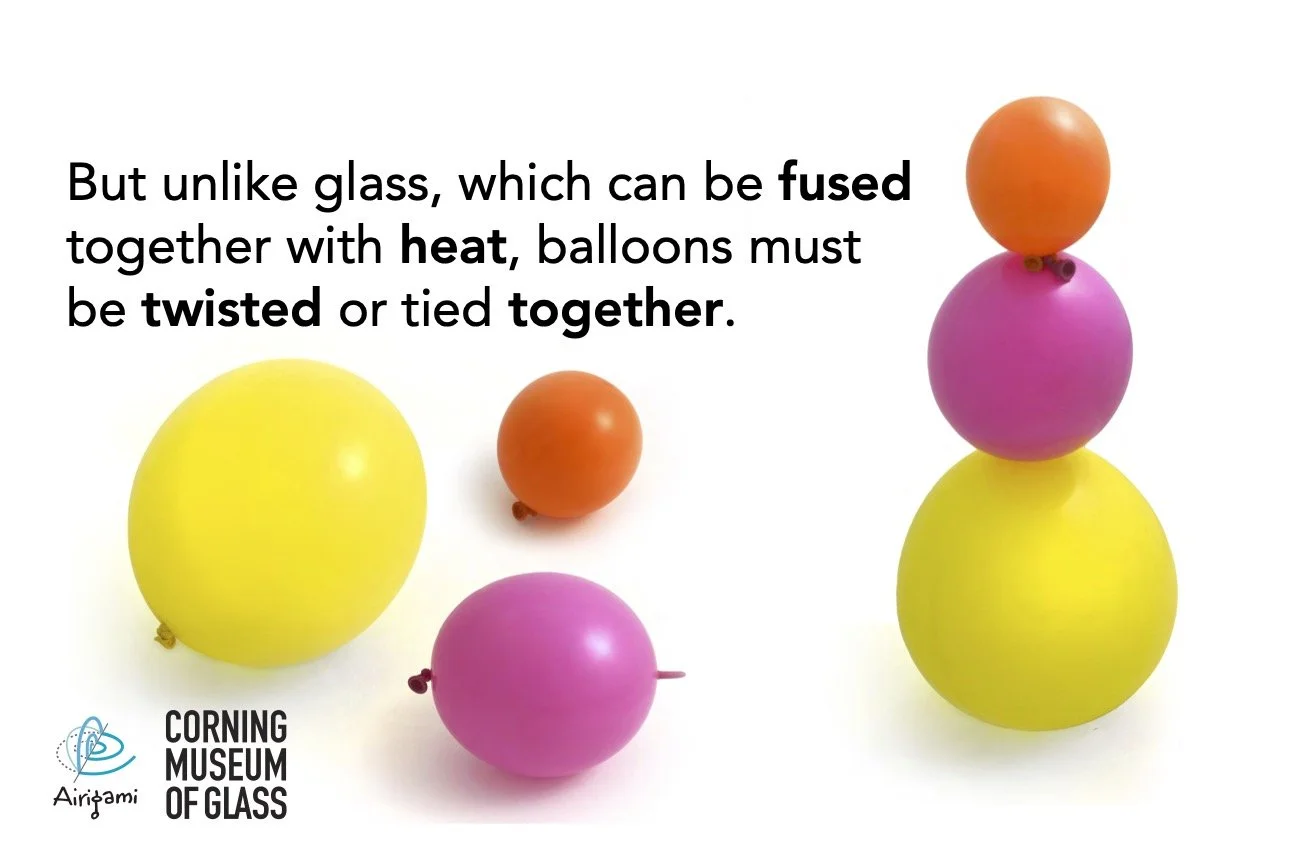
The biggest difference between glass and balloons, of course, is that glass lasts, for all intents and purposes, forever. Our balloon display will be gone in a matter of days. But that's ok. That just means we'll have to go back again to make something else and put up with the incredible hospitality and appreciation of the CMoG staff and visitors.